
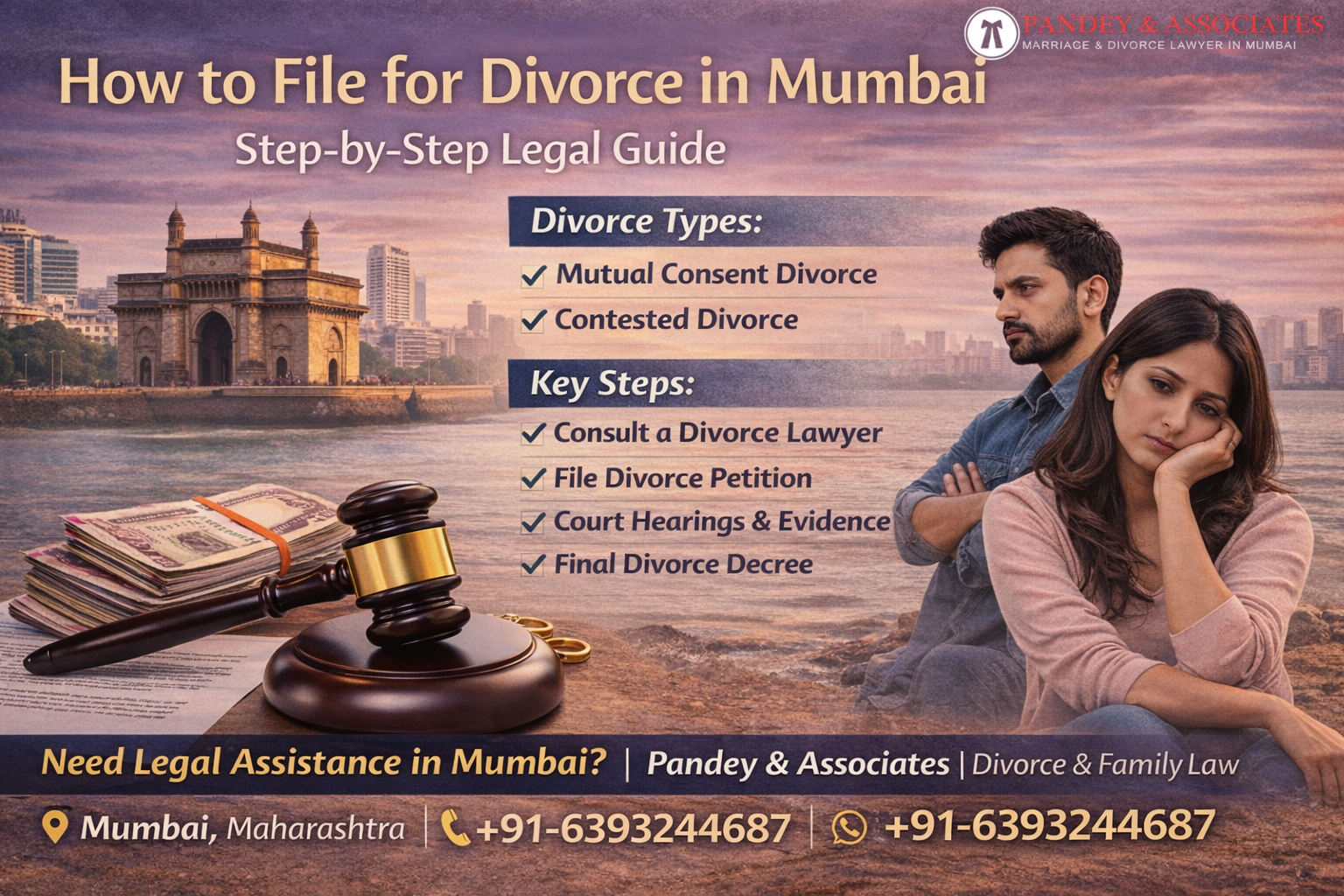
How to File for Divorce in Mumbai: Step-by-Step Legal Guide
Divorce is one of the most difficult decisions a couple can make. When a marriage no longer works and reconciliation is not possible, understanding the legal process becomes very important. If you are planning to file for divorce in Mumbai, knowing the correct legal steps, required documents, and court procedures can make the process smoother and less stressful.
In India, divorce is governed by personal laws and family court procedures. Whether the divorce is mutual or contested, every case follows a structured legal process through the family courts. This guide explains the step-by-step procedure to file for divorce in Mumbai and what individuals should expect during the process.
Understanding Divorce Laws in India
In India, divorce laws differ based on the religion of the spouses. Some of the commonly applicable laws include:
- Hindu Marriage Act, 1955 – Applicable to Hindus, Buddhists, Jains, and Sikhs
- Special Marriage Act, 1954 – Applicable to civil marriages regardless of religion
- Indian Divorce Act, 1869 – Applicable to Christians
- Muslim Personal Law – Applicable to Muslims
Most divorce cases filed in Mumbai fall under the Hindu Marriage Act or the Special Marriage Act. These laws provide legal grounds and procedures for ending a marriage through the court system.
Types of Divorce in Mumbai
Before filing for divorce, it is important to understand the two main types of divorce recognized under Indian law.
Mutual Consent Divorce
Mutual consent divorce occurs when both spouses agree that the marriage cannot continue and they jointly decide to separate. In this type of divorce, both parties agree on issues such as:
- Child custody
- Financial settlement or alimony
- Division of property or assets
Mutual consent divorce is generally faster and less complicated compared to contested divorce because both spouses cooperate during the legal process.
Contested Divorce
A contested divorce happens when one spouse files for divorce but the other spouse does not agree or disputes certain issues. These cases often involve disagreements related to:
- Child custody
- Alimony
- Property division
- Grounds for divorce
Contested divorces usually take longer because the court must examine evidence, hear arguments from both sides, and make a final judgment.
Step-by-Step Process to File for Divorce in Mumbai
Step 1: Consultation with a Divorce Lawyer
The first step is to consult a qualified divorce lawyer who can evaluate your situation and explain your legal options. A lawyer helps determine whether the case should proceed as a mutual consent divorce or a contested divorce.
During the consultation, you may discuss:
- Grounds for divorce
- Possible legal outcomes
- Child custody arrangements
- Financial settlements or maintenance
Professional legal advice at this stage can help avoid mistakes and ensure the case is filed correctly.
Step 2: Preparation of the Divorce Petition
Once the decision to file for divorce is made, a legal petition must be prepared. This petition includes important details such as:
- Information about the marriage
- Date and place of marriage
- Reasons or legal grounds for divorce
- Information about children (if any)
- Claims regarding alimony or maintenance
- Property or asset division
The petition is drafted carefully to comply with the legal requirements of the applicable marriage law.
Step 3: Filing the Petition in Family Court
After the petition is prepared, it is filed in the Family Court in Mumbai that has jurisdiction over the case. Generally, jurisdiction is based on:
- The place where the couple last lived together
- The location where the marriage was registered
- The residence of either spouse
Once the petition is submitted, the court officially registers the case.
Step 4: Court Notice to the Other Spouse
After the divorce petition is filed, the court sends a legal notice to the other spouse informing them about the case. The notice requires them to appear in court on a specified date.
In mutual consent divorce cases, both spouses appear together before the court. In contested cases, the other spouse may file a response or counter-claim.
Step 5: Mediation and Reconciliation Attempts
Family courts in Mumbai often encourage mediation between spouses before proceeding with the case. The purpose of mediation is to see whether reconciliation is possible or whether both parties can reach a settlement.
Mediation may help resolve disputes regarding:
- Child custody
- Financial settlement
- Property division
If the mediation process fails, the court continues with the divorce proceedings.
Step 6: Evidence and Court Hearings
In contested divorce cases, both parties must present evidence and arguments before the court. This stage may involve:
- Witness statements
- Documentary evidence
- Financial records
- Communication records
The judge reviews the evidence and hears arguments from both sides before making a decision.
Step 7: Final Divorce Decree
Once the court is satisfied that the marriage has broken down and legal grounds are established, it grants a divorce decree. This decree legally dissolves the marriage.
In mutual consent divorce cases, the court generally grants the divorce after the mandatory waiting period. In contested cases, the final decision may take longer depending on the complexity of the case.
Documents Required to File Divorce in Mumbai
Certain documents are typically required when filing a divorce case in family court. These may include:
- Marriage certificate
- Address proof of both spouses
- Passport-size photographs
- Proof of separation
- Income proof or financial documents
- Details regarding children
- Evidence supporting the grounds for divorce
Preparing these documents in advance helps ensure that the legal process proceeds smoothly.
How Long Does Divorce Take in Mumbai?
The duration of divorce proceedings depends on the type of case.
Mutual Consent Divorce
Mutual consent divorce generally takes around 6 months to 1 year, depending on the court schedule and completion of the mandatory cooling-off period.
Contested Divorce
Contested divorce cases may take 2 to 5 years or more, especially if there are disputes related to custody, property, or financial settlements.
The timeline varies based on the complexity of the case and the availability of evidence.
Importance of Legal Guidance
Divorce proceedings involve legal documentation, court procedures, and negotiations between parties. Having proper legal guidance ensures that individuals understand their rights and responsibilities during the process.
Experienced legal professionals can help with preparing documents, representing clients in court, and negotiating settlements when possible.
Law firms such as Pandey & Associates in Khar East, Mumbai, assist individuals with divorce and family law matters including child custody disputes, alimony claims, and family court proceedings.
Conclusion
Filing for divorce in Mumbai involves several legal steps, from consulting a lawyer and preparing a petition to attending court hearings and receiving the final divorce decree. Understanding the process and preparing the required documentation can help individuals navigate this difficult phase more confidently.
Whether the divorce is mutual or contested, professional legal advice can help protect your rights and ensure the process is handled correctly under Indian family law.
Leave a Comment