
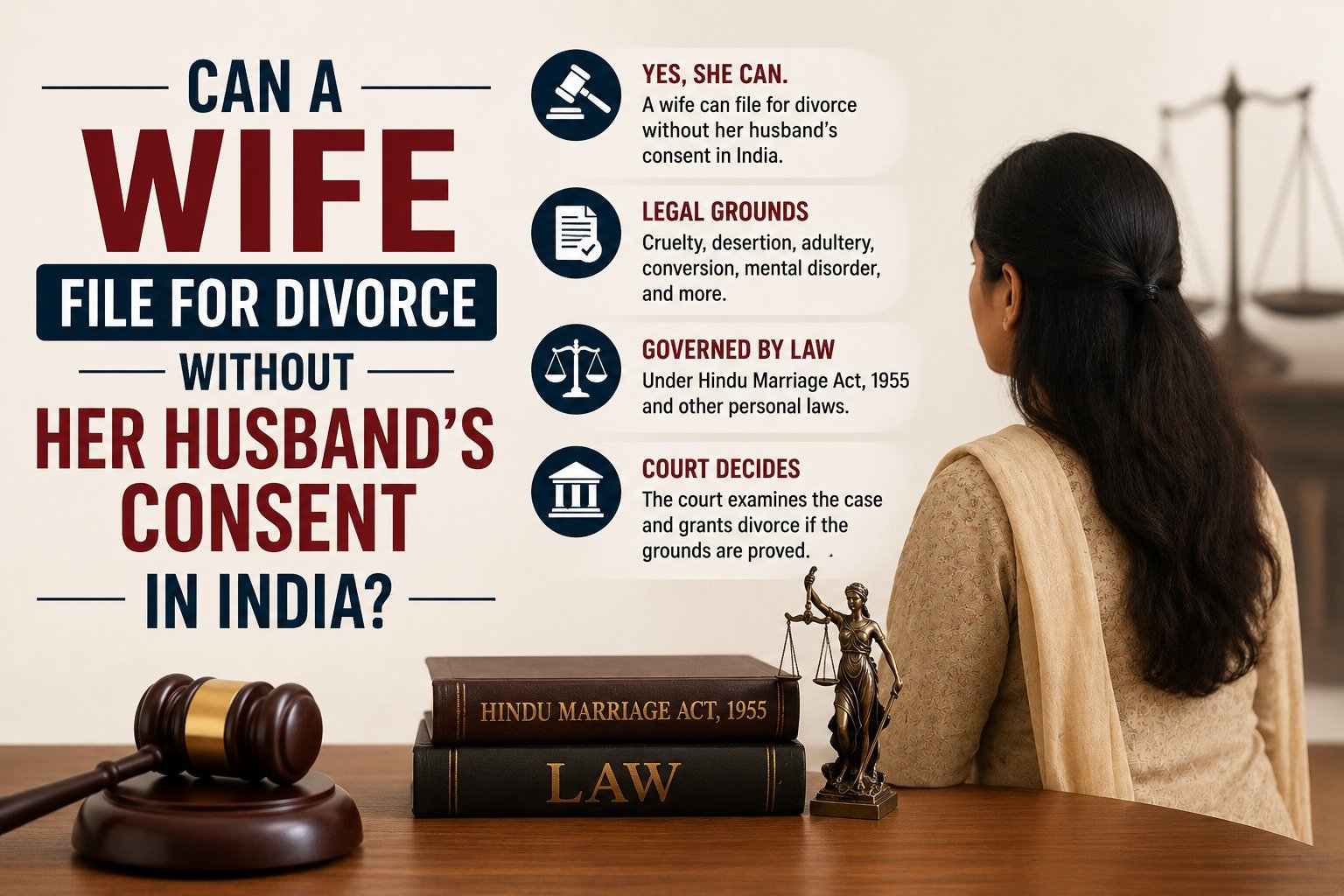
Can a Wife File for Divorce Without Her Husband’s Consent in India?
Marriage is a legal relationship, but unfortunately, not every marriage works out as expected. When a relationship becomes difficult or unbearable, many women wonder whether they can legally end the marriage even if their husband refuses to cooperate. A common question asked by women across India is: Can a wife file for divorce without her husband's consent?
The simple answer is yes. Under Indian law, a wife can file for divorce without her husband's consent if she has valid legal grounds for seeking dissolution of the marriage. This type of divorce is known as a contested divorce.
In this guide, we explain the legal provisions, grounds for divorce, court process, and important factors every woman should know before filing for divorce.
Can a Wife Get Divorced Without Her Husband Agreeing?
Yes. A husband's consent is not mandatory for filing a divorce petition. If a wife believes that the marriage has broken down due to cruelty, desertion, adultery, or other legally recognized grounds, she can approach the appropriate family court and initiate divorce proceedings.
While mutual consent divorce requires agreement from both spouses, a contested divorce can proceed even if one party opposes it.
Types of Divorce in India
1. Mutual Consent Divorce
In a mutual consent divorce, both husband and wife agree to end the marriage and settle issues such as child custody, maintenance, and property division.
2. Contested Divorce
A contested divorce is filed by one spouse against the other based on specific legal grounds. The other spouse's approval is not required to initiate the case.
If the husband refuses to cooperate or contests the divorce, the court will examine the evidence and decide the matter according to law.
Legal Grounds on Which a Wife Can File for Divorce
Under the Hindu Marriage Act, 1955 and other applicable personal laws, a wife may seek divorce on several recognized grounds.
Cruelty
Cruelty can be physical or mental. Examples include:
- Physical abuse
- Verbal harassment
- Emotional torture
- Constant humiliation
- Threats and intimidation
Mental cruelty is one of the most commonly cited grounds in modern divorce cases.
Desertion
If a husband abandons his wife without a valid reason and remains away for a continuous period prescribed by law, the wife may seek divorce on the ground of desertion.
Adultery
If the husband has engaged in a voluntary relationship outside the marriage, the wife may file for divorce based on adultery.
Conversion of Religion
If a husband converts to another religion without the wife's consent, this may constitute a valid ground for divorce under certain circumstances.
Mental Disorder
In specific situations involving severe mental illness that makes marital life impossible, divorce may be sought through legal proceedings.
Communicable Diseases
Certain serious medical conditions recognized under applicable laws may provide grounds for divorce.
Renunciation of the World
If a husband formally renounces worldly life and enters a religious order, the wife may have the right to seek dissolution of marriage.
Presumption of Death
If a husband has not been heard from or known to be alive for the legally specified period, the wife may seek divorce through the court.
Special Grounds Available to a Wife
Indian law provides certain additional protections specifically for women.
A wife may also seek divorce if:
- The husband has committed acts of sexual misconduct recognized under law.
- The husband has remarried during the subsistence of the marriage where such conduct is prohibited by law.
- Maintenance has been granted by a court but marital relations have not resumed.
The exact applicability depends on the facts of each case and the governing personal law.
What Is the Procedure for Filing Divorce Without Husband's Consent?
Step 1: Consult a Divorce Lawyer
An experienced family lawyer can evaluate the facts of the case and advise on the most appropriate legal grounds.
Step 2: Prepare Required Documents
Commonly required documents include:
- Marriage certificate
- Identity proof
- Address proof
- Photographs
- Evidence supporting the grounds for divorce
- Financial records, if relevant
Step 3: File the Divorce Petition
The petition is filed before the appropriate family court having jurisdiction over the matter.
Step 4: Court Notice to Husband
The court issues notice to the husband and provides an opportunity for him to respond.
Step 5: Evidence and Hearings
Both parties may present evidence, witnesses, and legal arguments before the court.
Step 6: Court Decision
After reviewing the facts and evidence, the court may grant or reject the divorce petition.
What If the Husband Refuses to Appear in Court?
Many women worry that their divorce case cannot proceed if the husband avoids court proceedings.
In reality, if the husband repeatedly ignores court notices and fails to appear despite proper service, the court may proceed according to law and may pass appropriate orders based on the circumstances of the case.
Therefore, a husband cannot permanently prevent divorce simply by refusing to participate.
Can a Wife Claim Maintenance During Divorce Proceedings?
Yes. Depending on the circumstances, a wife may seek:
- Interim maintenance during the case
- Permanent alimony after divorce
- Litigation expenses
- Child support for minor children
The court considers various factors such as income, financial needs, and responsibilities before passing orders.
Child Custody Rights After Divorce
If children are involved, the court's primary concern is the welfare and best interests of the child.
The court may decide:
- Physical custody
- Visitation rights
- Educational responsibilities
- Child maintenance obligations
Custody decisions are made based on the child's welfare rather than solely on parental preference.
How Long Does a Contested Divorce Take?
The duration varies depending on:
- Complexity of the case
- Court workload
- Availability of evidence
- Cooperation of both parties
Contested divorces generally take longer than mutual consent divorces because disputed issues require judicial determination.
Common Misconceptions About Divorce Without Consent
Myth: A Husband's Signature Is Mandatory
Fact: A wife can legally file a contested divorce without her husband's consent.
Myth: Divorce Cannot Proceed if the Husband Refuses to Cooperate
Fact: Courts have legal mechanisms to proceed with cases even when one party is uncooperative.
Myth: Only Physical Violence Is Considered Cruelty
Fact: Mental cruelty can also be a valid ground for divorce.
Conclusion
A wife in India has the legal right to seek divorce even if her husband does not agree to end the marriage. While mutual consent divorce is often faster, the law also provides remedies through contested divorce when a marriage has become unsustainable due to cruelty, desertion, adultery, or other legally recognized grounds.
Every case is unique, and understanding your rights is the first step toward making informed decisions. Seeking guidance from an experienced divorce lawyer can help you navigate the legal process effectively and protect your interests throughout the proceedings.

Leave a Comment