
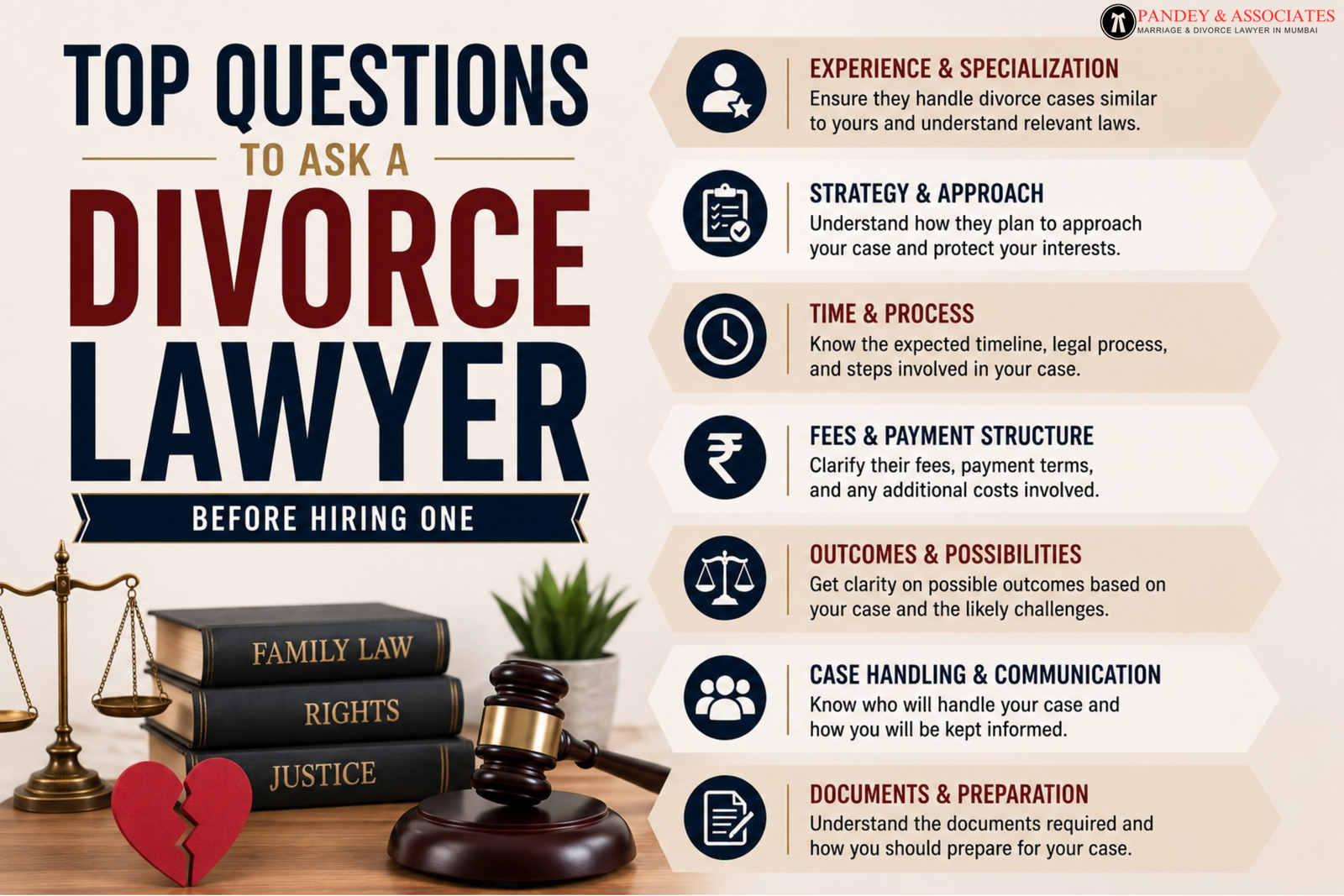
Divorce is one of the most significant legal and personal decisions a person can face. Choosing the right divorce lawyer can make a major difference in how smoothly your case proceeds, how well your rights are protected, and how effectively disputes are resolved. Before hiring a lawyer, it is important to ask the right questions to ensure you receive professional guidance tailored to your situation.
In this guide, we'll cover the most important questions you should ask a divorce lawyer before making your decision.
Why Choosing the Right Divorce Lawyer Matters
A divorce lawyer does much more than file paperwork. They help you understand your legal rights, negotiate settlements, handle child custody matters, address property division, and represent you in court if necessary. Hiring an experienced lawyer can help reduce stress and improve the chances of achieving a fair outcome.
1. How Much Experience Do You Have Handling Divorce Cases?
One of the first questions to ask is about the lawyer's experience in family law. Divorce laws can be complex, and an attorney with extensive experience handling divorce matters will be better prepared to manage challenges that may arise during your case.
Ask about:
- Number of years practicing family law
- Experience with mutual consent divorce
- Experience with contested divorce cases
- Child custody and alimony matters
- Property and asset division cases
2. Have You Handled Cases Similar to Mine?
Every divorce case is unique. Some involve child custody disputes, while others focus on property division, maintenance, or domestic violence concerns.
Understanding whether the lawyer has managed cases similar to yours can help you assess their ability to handle your specific legal issues.
3. What Is the Likely Outcome of My Case?
While no lawyer can guarantee a result, an experienced attorney should be able to provide a realistic assessment of your case based on the facts available.
This discussion can help you understand:
- Possible legal options
- Strengths and weaknesses of your case
- Potential challenges
- Expected timeline
4. What Are the Legal Fees and Additional Costs?
Understanding legal expenses upfront helps avoid surprises later.
Ask about:
- Consultation fees
- Lawyer's professional charges
- Court fees
- Documentation charges
- Additional expenses for hearings or court appearances
A transparent lawyer will clearly explain all costs before beginning representation.
5. How Long Will the Divorce Process Take?
The duration of a divorce depends on several factors, including the complexity of the case and whether it is contested or mutual.
Discussing timelines can help you set realistic expectations and prepare for the legal process ahead.
6. Will You Personally Handle My Case?
In some law firms, junior associates or support staff may handle portions of a case.
Ask:
- Who will be your primary point of contact?
- Who will attend court hearings?
- Who will respond to your questions?
Knowing who is responsible for your case ensures clear communication throughout the process.
7. What Is Your Approach to Settlement and Negotiation?
Not every divorce case requires a lengthy court battle. Many disputes can be resolved through negotiation and mutual agreement.
Ask your lawyer whether they prioritize:
- Amicable settlements
- Mediation
- Collaborative solutions
- Litigation when necessary
A balanced approach often saves time, money, and emotional stress.
8. How Will Child Custody Issues Be Handled?
If children are involved, custody arrangements become one of the most important aspects of the divorce process.
Questions to ask include:
- What custody options are available?
- How do courts determine custody?
- What are the visitation rights of the non-custodial parent?
- How is child support calculated?
A knowledgeable lawyer can explain the legal framework and help protect the child's best interests.
9. How Will Property and Assets Be Divided?
Division of property can become a major source of conflict during divorce proceedings.
Ask your lawyer:
- How are marital assets identified?
- How are debts divided?
- What happens to jointly owned property?
- How are business interests handled?
Understanding these issues early can help prevent future disputes.
10. How Often Will I Receive Updates About My Case?
Communication is essential when dealing with legal matters.
Before hiring a lawyer, ask:
- How often will updates be provided?
- Will communication occur via phone, email, or meetings?
- What is the expected response time for queries?
A lawyer who maintains clear communication helps clients stay informed and confident throughout the process.
11. What Documents Should I Prepare?
Proper documentation can significantly impact the progress of a divorce case.
Your lawyer may require:
- Marriage certificate
- Identity proof
- Address proof
- Financial records
- Property documents
- Children's educational records (if applicable)
Preparing documents in advance can save time and reduce delays.
12. What Should I Avoid Doing During My Divorce Case?
Experienced divorce lawyers often advise clients on actions that could negatively affect their case.
Common mistakes may include:
- Posting sensitive information on social media
- Hiding financial information
- Ignoring court notices
- Making emotional decisions without legal advice
Understanding these risks can help protect your legal interests.
Red Flags to Watch for When Hiring a Divorce Lawyer
While searching for legal representation, be cautious if a lawyer:
- Guarantees specific results
- Avoids discussing fees
- Has poor communication practices
- Lacks family law experience
- Makes unrealistic promises
Professionalism, transparency, and experience are key qualities to look for.
Conclusion
Hiring a divorce lawyer is an important decision that can significantly impact your future. Asking the right questions before making your choice helps ensure that you find a lawyer who understands your needs, communicates effectively, and has the experience required to handle your case.
Take time to evaluate your options, schedule consultations, and select a legal professional who can guide you through the divorce process with confidence and clarity.
A well-informed decision today can make the legal journey smoother and help you achieve a fair and practical resolution.


Leave a Comment