
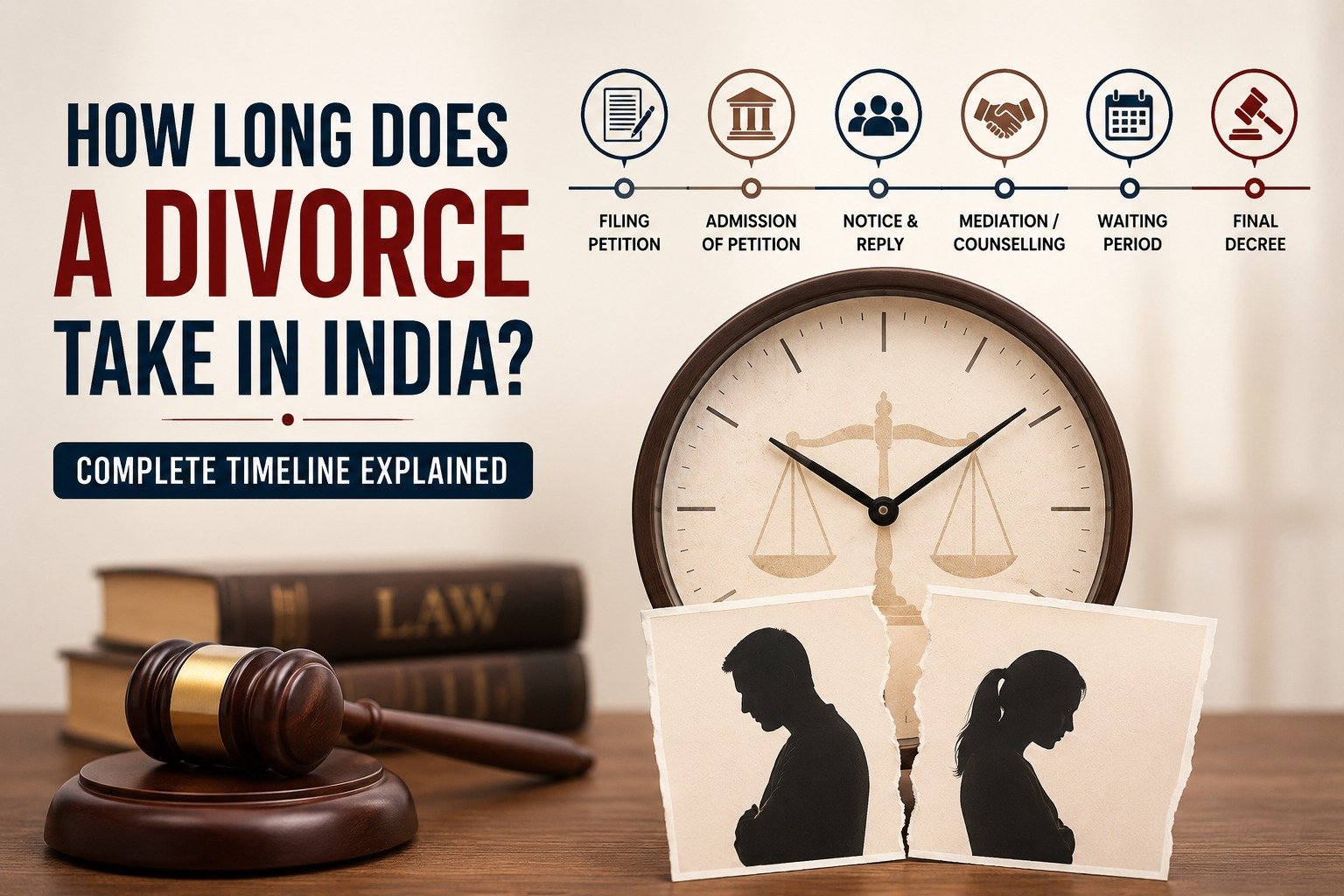
How Long Does a Divorce Take in India? Complete Timeline Explained
One of the most common questions people ask when considering separation is, "How long does a divorce take in India?" While there is no single answer that applies to every case, understanding the divorce process and the factors that affect timelines can help couples prepare for what lies ahead.
The duration of a divorce depends on several factors, including whether the divorce is mutual or contested, the complexity of the issues involved, court schedules, and the level of cooperation between spouses.
In this guide, we'll break down the typical divorce timelines in India and explain what can speed up or delay the process.
Types of Divorce in India
The time required for a divorce largely depends on the type of divorce being filed.
Mutual Consent Divorce
A mutual consent divorce occurs when both spouses agree to end the marriage and have resolved issues such as:
- Child custody
- Visitation rights
- Alimony and maintenance
- Property division
- Financial settlements
Since both parties agree on the major issues, this process is generally faster.
Contested Divorce
A contested divorce is filed when one spouse does not agree to the divorce or when disputes exist regarding custody, maintenance, property, or other matters.
These cases typically take longer because the court must examine evidence, hear both sides, and make legal determinations.
How Long Does a Mutual Consent Divorce Take?
Mutual consent divorce is usually the quickest way to legally dissolve a marriage in India.
Typical Timeline
In most cases, a mutual consent divorce may take approximately 6 months to 18 months, depending on the circumstances and court workload.
General Process
Step 1: Filing the First Motion
Both spouses jointly file a petition before the family court expressing their intention to seek divorce.
Step 2: Recording Statements
The court records statements from both parties confirming their consent.
Step 3: Cooling-Off Period
Traditionally, a waiting period is provided to allow spouses an opportunity to reconsider reconciliation.
In certain circumstances, courts may waive this period if reconciliation is clearly not possible and all issues have been settled.
Step 4: Second Motion
After the required waiting period, the parties appear before the court again and confirm their decision.
Step 5: Final Decree
The court grants the divorce decree after being satisfied that all legal requirements have been fulfilled.
How Long Does a Contested Divorce Take?
A contested divorce generally takes significantly longer than a mutual consent divorce.
Typical Timeline
Depending on the complexity of the case, a contested divorce may take anywhere from 2 to 5 years or more.
In some cases involving extensive disputes or appeals, proceedings may continue for an even longer period.
Why Do Contested Divorces Take Longer?
Several stages are involved in contested divorce proceedings.
Filing of Petition
One spouse files a divorce petition based on legally recognized grounds.
Service of Notice
The court issues notice to the other spouse.
Reply and Counterclaims
The respondent may file objections, defenses, or counterclaims.
Evidence Stage
Both parties submit documents, witnesses, and supporting evidence.
Cross-Examination
Witnesses may be examined and cross-examined.
Final Arguments
Both sides present their legal arguments before the court.
Judgment
The court reviews all evidence and issues its final decision.
Each stage requires time and may involve multiple hearings.
Factors That Affect Divorce Timelines
Every divorce case is unique. Several factors influence how quickly a case can be resolved.
Cooperation Between Spouses
Cases where spouses cooperate and reach settlements tend to conclude faster than highly disputed matters.
Child Custody Disputes
Disagreements regarding custody and visitation rights often increase the duration of proceedings.
Property and Financial Disputes
Cases involving significant assets, businesses, investments, or maintenance claims may require additional hearings and evidence.
Court Workload
The number of pending cases in a particular family court can affect scheduling and hearing dates.
Availability of Evidence
Delays may occur if documents, witnesses, or financial records are difficult to obtain.
Appeals
If either party challenges the court's decision, the matter may continue in higher courts, extending the overall timeline.
Can Divorce Be Faster in India?
In some situations, yes.
The following steps may help reduce delays:
- Opting for mutual consent divorce when possible
- Resolving financial and custody issues through negotiation
- Maintaining proper documentation
- Attending court hearings on time
- Following legal advice promptly
- Avoiding unnecessary disputes
A cooperative approach often leads to a faster resolution.
What If One Spouse Refuses to Cooperate?
Many people assume that a divorce cannot proceed if one spouse refuses to participate.
However, Indian courts have legal procedures to deal with non-cooperation. While refusal to cooperate may delay the process, it does not necessarily prevent the case from moving forward.
The court will examine the facts and proceed according to law.
Common Reasons for Divorce Delays
Some of the most common causes of delay include:
- Repeated adjournments
- Non-appearance of parties
- Disputes over child custody
- Property-related conflicts
- Lack of supporting evidence
- Settlement negotiations that remain unresolved
- Appeals against court orders
Being proactive and organized can help minimize unnecessary delays.
How Can a Divorce Lawyer Help?
An experienced divorce lawyer can help streamline the process by:
- Preparing accurate documentation
- Filing petitions correctly
- Advising on legal strategy
- Negotiating settlements
- Representing clients in court
- Ensuring procedural compliance
Professional legal guidance often helps avoid mistakes that could prolong the case.
Frequently Asked Questions
What is the fastest type of divorce in India?
Mutual consent divorce is generally the fastest option because both spouses agree to end the marriage and settle related issues.
Can a divorce be completed within a few months?
In certain circumstances, a mutual consent divorce may be completed relatively quickly, especially when disputes have already been resolved.
Why do some divorce cases take years?
Contested divorces involving custody battles, property disputes, maintenance claims, or appeals often require additional hearings and judicial review.
Can court delays affect divorce duration?
Yes. The workload of the family court and scheduling of hearings can significantly impact overall timelines.
Conclusion
The time required for a divorce in India depends largely on whether the case is mutual or contested. While mutual consent divorces are generally resolved more quickly, contested divorces may take several years depending on the complexity of the issues involved.
Understanding the process, preparing the necessary documents, and seeking professional legal guidance can help reduce delays and make the journey smoother. Every divorce case is different, but informed planning can help you navigate the legal process with greater confidence and clarity.
Leave a Comment