
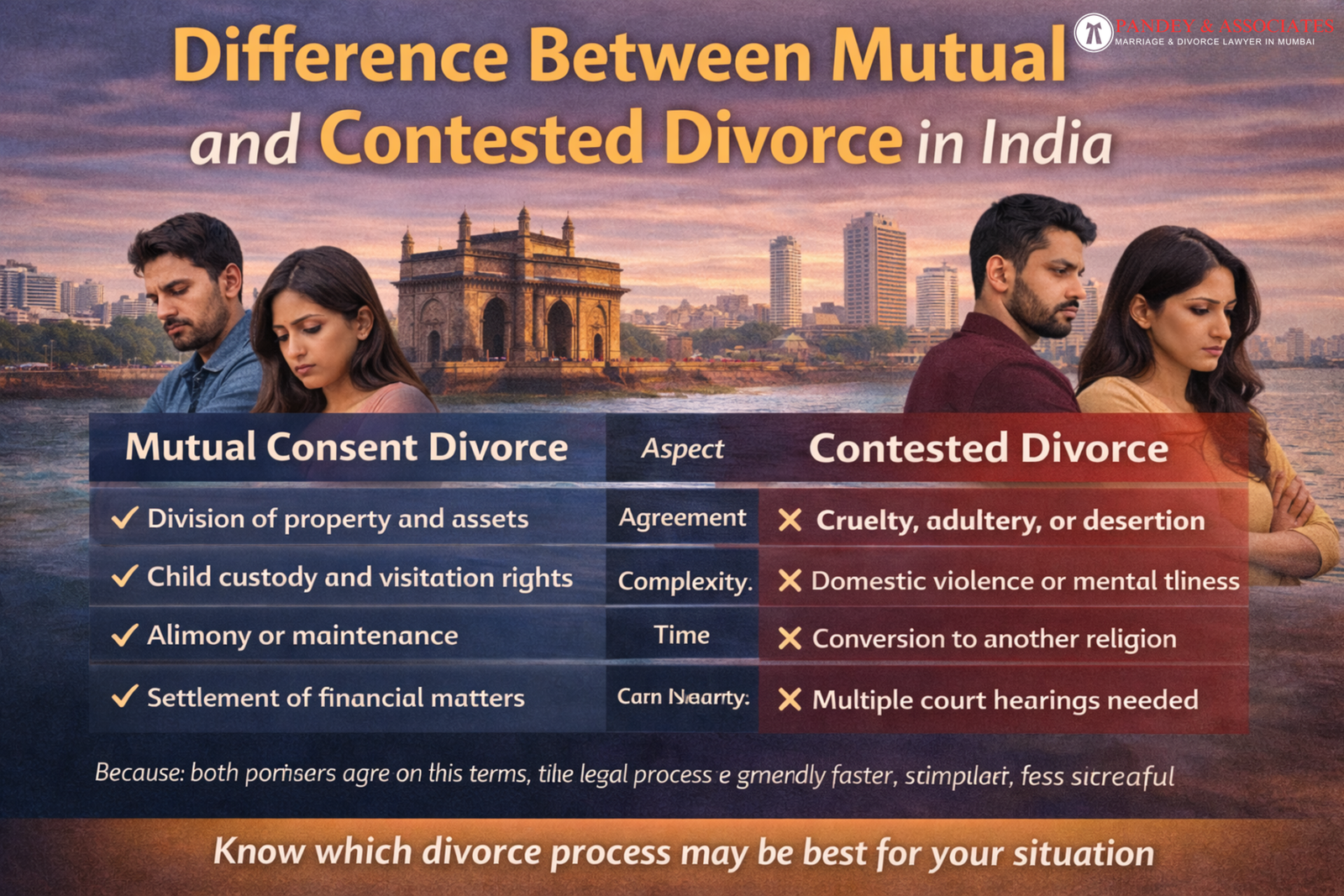
Difference Between Mutual and Contested Divorce in India
Divorce is a legal process that ends a marriage through the court. In India, couples can file for divorce in two main ways: mutual consent divorce and contested divorce. Understanding the difference between mutual and contested divorce in India is important for couples who are considering legal separation.
Each type of divorce has different procedures, timelines, and legal requirements. Knowing these differences can help couples make informed decisions about their situation.
What is Mutual Consent Divorce?
A mutual consent divorce occurs when both husband and wife agree that the marriage cannot continue and jointly decide to end it legally.
In this type of divorce, both parties agree on key matters such as:
- Division of property and assets
- Child custody and visitation rights
- Alimony or maintenance
- Settlement of financial matters
Because both partners agree on the terms, the legal process is generally faster, simpler, and less stressful.
Key Features of Mutual Consent Divorce
- Both spouses agree to the divorce
- Joint petition is filed in court
- Fewer court hearings are required
- Less conflict and legal complexity
- Faster resolution compared to contested divorce
Mutual divorce is usually preferred because it reduces emotional stress and legal expenses.
What is Contested Divorce?
A contested divorce occurs when one spouse files for divorce but the other spouse does not agree to it or disputes the terms of the separation.
In such cases, the court must examine the evidence and determine whether valid legal grounds exist for divorce.
Common grounds for contested divorce in India include:
- Cruelty
- Adultery
- Desertion
- Domestic violence
- Mental illness
- Conversion to another religion
Since one spouse challenges the divorce, the case can take longer and may involve multiple court hearings.
Key Features of Contested Divorce
- Filed by one spouse against the other
- Requires legal proof or evidence
- Multiple court hearings may be required
- More complex legal process
- Takes longer to resolve
Contested divorces often involve legal disputes over property, custody, and financial settlements.
Major Differences Between Mutual and Contested Divorce
Understanding the key differences between mutual and contested divorce in India can help couples choose the appropriate legal route.
| Aspect | Mutual Consent Divorce | Contested Divorce |
|---|---|---|
| Agreement | Both spouses agree to divorce | One spouse files without agreement |
| Complexity | Simple legal process | More complex legal proceedings |
| Time | Usually faster | Can take several years |
| Court Hearings | Fewer hearings | Multiple hearings |
| Evidence Required | Not much evidence required | Legal proof of grounds required |
| Conflict Level | Minimal conflict | Often involves disputes |
Which Divorce Process is Faster?
In most cases, mutual consent divorce is much faster than contested divorce because both parties agree to the separation terms.
Contested divorce cases may take longer due to:
- Legal disputes
- Evidence examination
- Multiple court hearings
- Appeals or counter-claims
Therefore, many couples prefer mutual consent divorce if they can reach a peaceful agreement.
Importance of Legal Guidance in Divorce Cases
Divorce involves several legal procedures, documentation requirements, and court filings. Seeking professional legal advice can help ensure that the process is handled correctly and efficiently.
Experienced legal professionals such as Pandey & Associates assist clients in understanding their legal options and navigating the divorce process smoothly while protecting their rights.
Conclusion
Understanding the difference between mutual and contested divorce in India helps couples make informed decisions about ending their marriage legally. Mutual consent divorce is generally quicker and less stressful, while contested divorce may involve lengthy legal proceedings and disputes.
Choosing the right legal approach and having proper legal guidance can help make the process smoother and ensure a fair resolution for both parties.



Leave a Comment